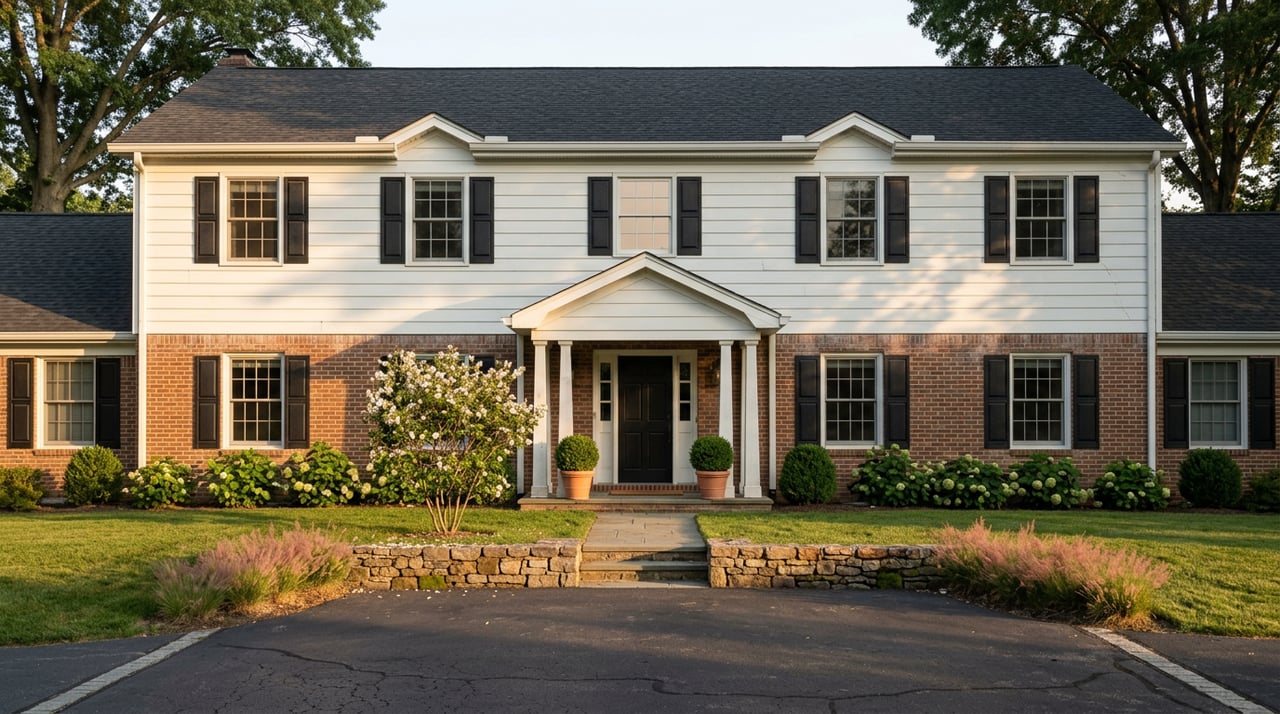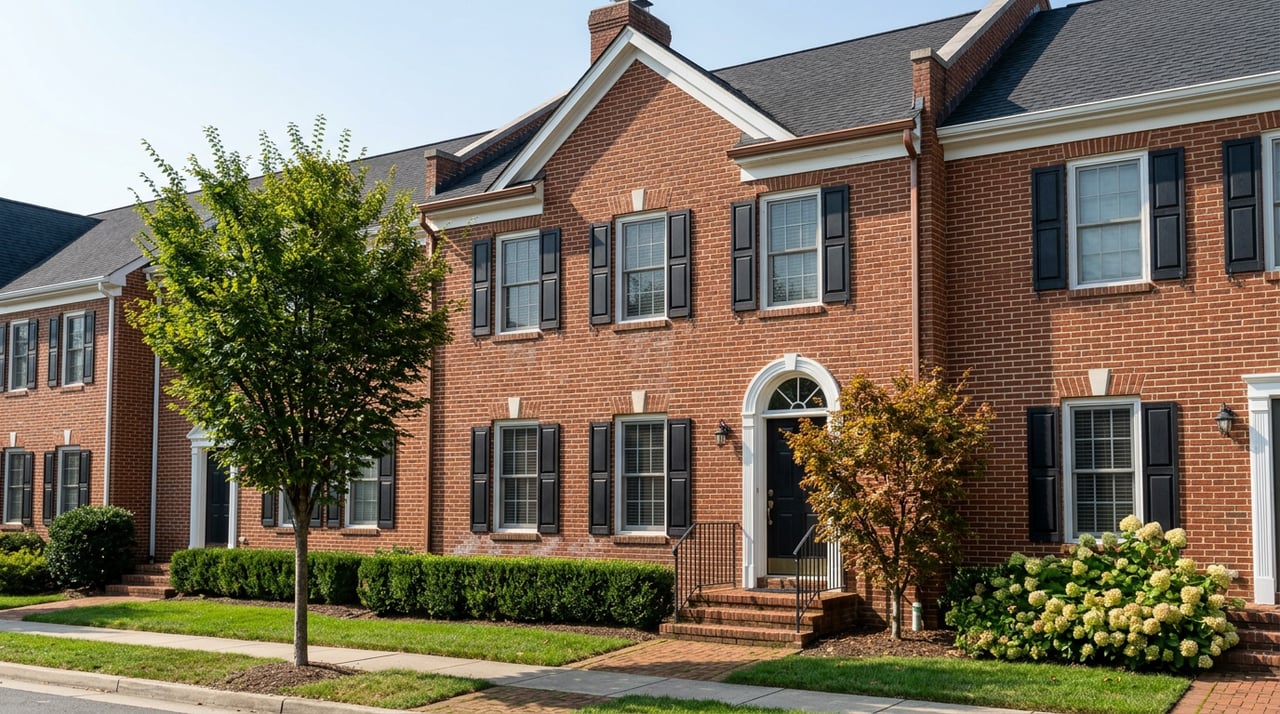
A well-kept brick colonial in Clarksburg Village goes on the market priced right against the comps. Same square footage as what closed two streets over last quarter, same finish level, same school assignment. The showings should come steadily. Instead they trickle in, and the agent fielding calls keeps hearing a version of the same question: is there any flexibility on price. Nobody mentions the real comparison they're making in their head, because they don't think to say it out loud. They're not weighing this colonial against the house that sold last spring. They're weighing it against a quick-move-in unit at Gatherings at Cabin Branch, a mile and a half away, where the builder just knocked tens of thousands of dollars off the true cost of ownership without touching the price on the sign.
That's the mechanism worth understanding if you own a home in Clarksburg right now, whether you're getting ready to list or just tracking what your equity is doing. The median price in this market has barely moved in 2026. The real discount buyers are shopping has moved plenty. It's just been rerouted somewhere the public data doesn't show.
What the median actually says this year
Pull three different snapshots of Clarksburg and you get three numbers that all sound calm.
| Source and timing | What it reported | What it measures |
|---|---|---|
| Sold prices, December 2025 | Median sale price of $626,000, up 1.6% year over year, with homes taking about 70 days to sell compared to 58 days the year before | Closed transactions, recorded at contract price |
| Home value index, mid-2026 | Typical home value of $613,034, up 0.5% over the prior year | A modeled estimate across the full housing stock, new and resale combined |
| Active listings, August 2026 | Median list price of $615,000, down about 3% from the same month in 2025, with a median 45 days on market | What sellers are currently asking, not what anyone has paid |
Three ways of counting the same market, three numbers within about two percent of each other, and none of them are stagnant so much as they're quiet. A market that looked like this a year ago and looks almost identical today would normally tell you nothing changed. In Clarksburg right now, that's not the whole story. The stability in these numbers is coming from the resale side, where price is still the only lever sellers can pull and every dollar of movement shows up in the public record. On the new-construction side, the lever isn't price. It's the incentive stacked on top of it, and that lever doesn't move the number anyone is tracking.
Why builders would rather pay your closing costs than lower the price
There's a reason production builders in Montgomery County have leaned hard into credits, rate buydowns, and fee waivers this year instead of simply marking down list prices. A price cut on one unit resets the appraised value for every other unit in that same community, including the ones the builder already sold at full price to buyers who are now watching a neighbor get the same floor plan for less. Mortgage industry coverage of this pattern has been consistent through 2026: builders will run through closing-cost credits, upgrade packages, and buydowns before they touch the sticker price, because the sticker price is what every future appraisal in that subdivision gets measured against, as Kiplinger has reported on builder mortgage incentives. A trade outlet covering loan officers who work new-construction deals put it more bluntly: builders treat an outright price drop as a last resort reserved for finished spec homes sitting unsold near quarter's end, precisely because it resets the comp for the whole community, according to National Mortgage Professional's reporting on builder incentive strategy.
Clarksburg has been a working example of this all year. Beazer Homes has been running large incentive campaigns at Gatherings at Cabin Branch, its 55-plus condo community on Petrel Street. One version of the offer advertised savings of up to $71,000 combined with $10,000 toward closing costs on select quick move-in homes, a package the builder's own site listed as running through a set window earlier this summer. A separate promotion from the same builder offered to pay five years of condo and HOA fees for buyers who financed through its preferred lender, as described on Beazer's community page for Gatherings at Cabin Branch. Builders rotate these offers on their own schedule and the specific numbers shift from month to month, so treat any single figure as a snapshot of what's possible rather than a standing offer. What doesn't shift is the pattern. Craftmark Homes is building age-restricted townhomes at its own Village at Cabin Branch a short walk away, and Stanley Martin has its own Cabin Branch community in the same corridor. Three active builders, all competing for the same buyer, all with the same reason to protect their list price by discounting somewhere the recorded sale price never sees.
The asymmetry that resale sellers are absorbing
Here's the part that matters most if you own a home in Clarksburg Village, Timbercreek, Greenway Village, or Clarksburg Town Center and you're deciding how to price it this fall. When a builder pays your closing costs or covers five years of association fees, none of that shows up in the deed. The recorded sale price stays at full value, the comp stays clean, and every future appraisal in that community benefits from a number that was never really the cash price a buyer paid. When a resale seller cuts an asking price by $15,000 to compete, that new number is permanent. It's in the county record. It's the next appraiser's anchor. It's the next seller's ceiling.
That asymmetry is exactly why a straight price cut is usually the wrong first move for a resale seller feeling pressure from new-construction competition nearby. A closing-cost credit or a modest rate buydown offered on your own listing accomplishes something closer to what the builder is doing. It answers the buyer's actual math, since most buyers are shopping a monthly payment more than a sticker price, and it keeps your comp intact for your own resale value and your neighbors' down the line. Concessions are visible to an appraiser, who evaluates the property at the full contract price and simply notes the credit as a line item, not as a value adjustment. A price cut, by contrast, changes the number every appraiser after you will start from.
None of this means resale is losing to new construction as a category. It means the comparison a buyer is running in their head right now isn't sticker versus sticker. It's total cost of ownership versus total cost of ownership, and one side of that comparison is currently getting help that never shows up in the data everyone quotes.
What this means depending on which side of the deal you're on
If you're getting ready to sell a resale home in Clarksburg, price it against the comps as always, but before you touch the number in response to slow traffic, ask what the nearest active new-construction community is offering that quarter. A credit toward closing costs, a modest rate buydown, or covering the first year of HOA dues can answer that competition without resetting the value of your own home or your neighbors'.
If you're comparing a resale purchase against new construction in Clarksburg, ask the builder's sales office for the full incentive package in writing, not just the sticker price, and run the total cost including any preferred-lender terms before assuming the new build is more expensive on paper. The math sometimes favors the resale home once the actual closing costs are on the table, and sometimes it doesn't. You won't know until you ask for the number that isn't printed on the sign.
A few questions worth asking before you list or make an offer
Does a builder's closing-cost credit lower the home's recorded sale price? No. The credit is typically noted separately in the transaction, while the contract price used for the deed and future comps stays at the full asking figure.
Should a resale seller match a builder's incentive dollar for dollar? Not necessarily. The goal is to answer the buyer's monthly payment math, not to win a bidding war against a number that changes every few months. A modest, well-timed credit often does more than a larger price cut.
How long do these builder incentive offers typically last? They tend to run in windows tied to a builder's fiscal quarter or a specific sales event, then get replaced with a different package. Anyone comparing new construction to resale should confirm the current offer directly with the builder's sales office rather than relying on a figure from a prior month.
If you're weighing whether to list a resale home in Clarksburg this season, or trying to make sense of what a nearby new-construction deal actually means for your numbers, Jack Kort has spent decades pricing homes in this exact stretch of Montgomery County against exactly this kind of competition. Let's Connect.