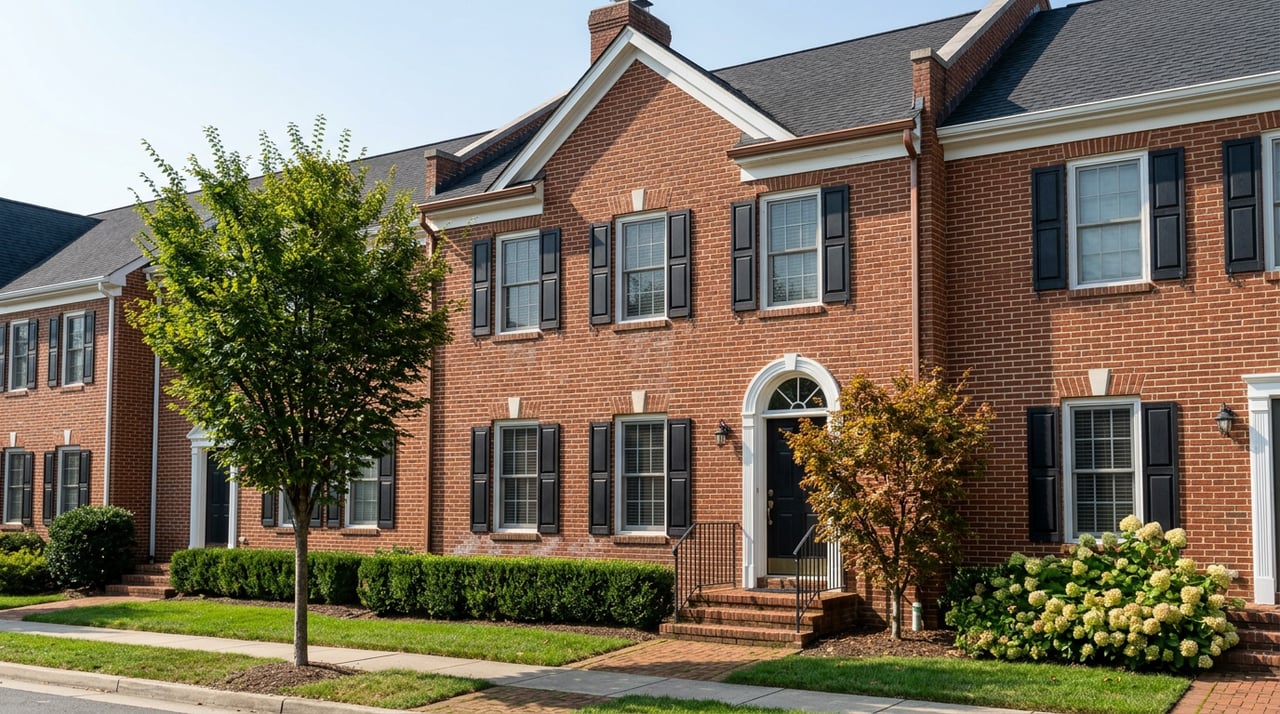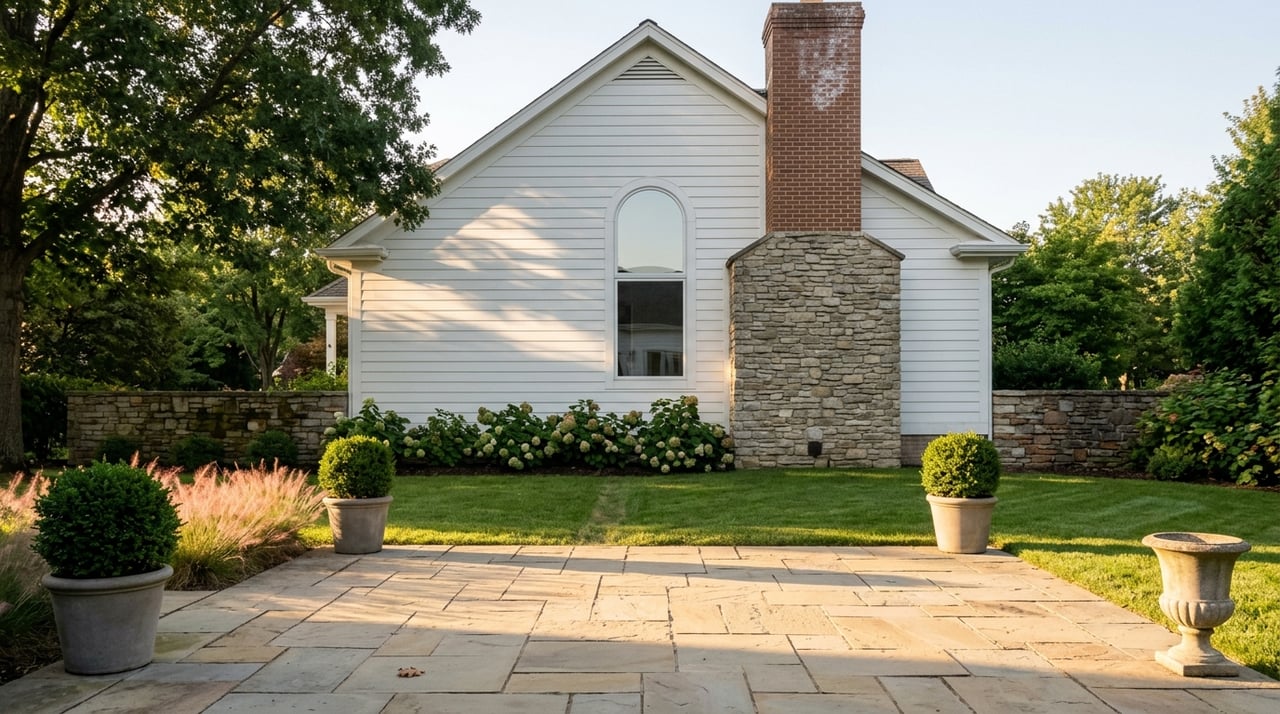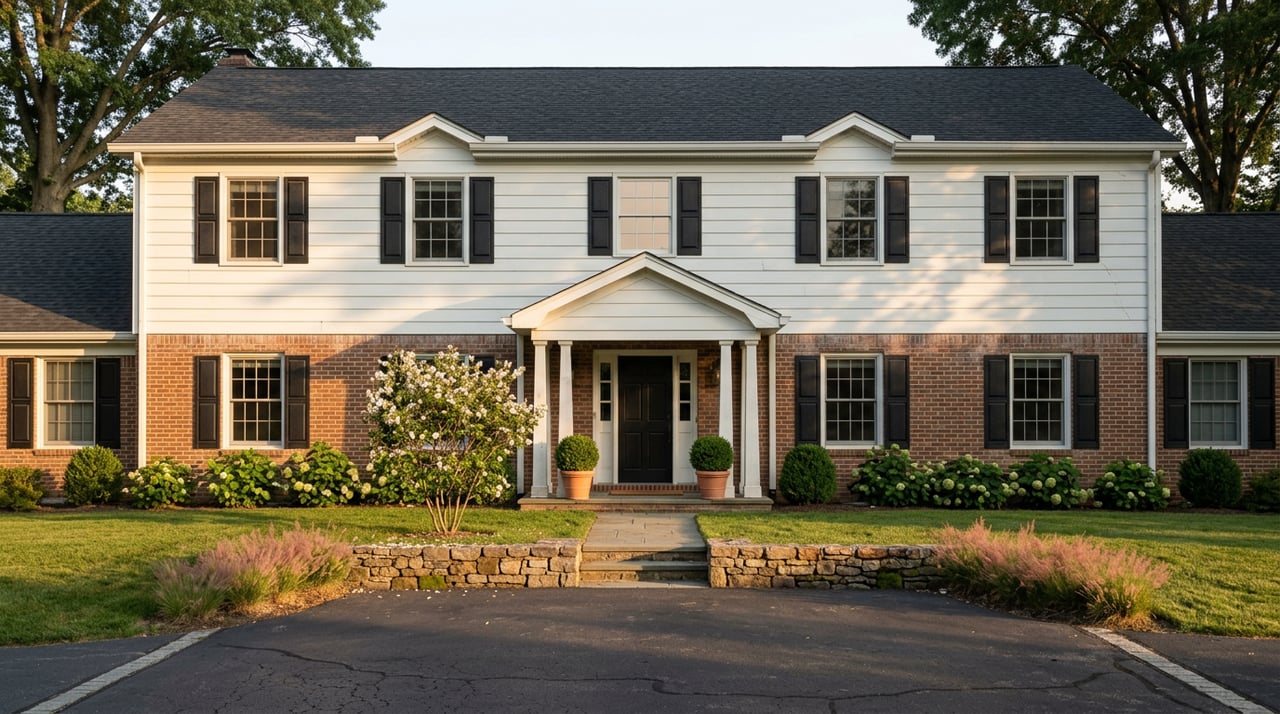
Two listings near the same price point in Poolesville can represent two entirely different ownership experiences. One sits on a third of an acre inside a subdivision like Brightwell Crossing, tied into the Town's shared water and sewer system. The other sits on three or five acres a few minutes past the corporate limit, drawing from a private well and discharging to a private septic field that the buyer will own and maintain for as long as they live there. The listing photos may look similar. The systems underneath them are not, and the difference shows up at closing, at resale, and every time either owner plans an addition.
For a buyer comparing Poolesville to other towns in the Agricultural Reserve, that distinction matters more than the number on the listing sheet. Here is what actually separates one Poolesville property from another, and why the answer is shifting under Maryland law right now.
The town line does more work than the price tag
Poolesville controls its own zoning, separately from Montgomery County, and updated its code in 2014 to give more flexibility to commercial, agricultural, and agriculture-compatible uses inside the corporate limits. That local control is what let subdivisions like Brightwell Crossing and Stoney Springs get built on lots as small as a third to three-quarters of an acre. The only reason those lot sizes work is that both developments connect to Town water and sewer, something the Town's own land use plan credits directly for making that density possible.
Step outside the corporate limits and the rules change completely, because Montgomery County zoning takes over.
| Where the parcel sits | Density allowed | Typical lot size | Water and sewer |
|---|---|---|---|
| Inside Poolesville's corporate limits | Set by Town zoning | As small as ⅓ to ¾ acre | Shared Town water and sewer system |
| Rural and Rural Cluster zones just outside town | 1 dwelling per 5 acres | As small as 1 acre in a cluster | Private well and septic |
| Agricultural Reserve | 1 dwelling per 25 acres | Several acres minimum | Private well and septic |
That table is the reason a buyer touring Poolesville in one afternoon can see a townhome-scale lot and a working horse property within a ten-minute drive of each other, both technically "Poolesville." Newer projects moving through the Town's approval process now, including Wootton Woods, Russell Branch, and Brightwell Reserve, along with infill projects like Ferry Crossing along Fisher Avenue and the 38-townhome Poolesville Crossing at the Fisher and Wootton Avenue intersection, are all inside that same corporate boundary and depend on the same water and sewer access. A three-home subdivision on 3.5 acres along Fisher Avenue or an eight-lot estate project on two-acre parcels near Spates Hill Road sits in a different category entirely, closer to the private-system side of the ledger even when it carries a Poolesville address.
"Public water" here still comes from a well
A buyer moving from a jurisdiction with municipal water might assume that connecting to Poolesville's system means leaving wells behind. It does not. The Town's own water supply is drawn from Town-owned wells, not a reservoir or a river intake, and large subdivisions like Brightwell Crossing and Stoney Springs were required to fund new wells as part of building out that shared system. The Maryland Department of the Environment requires the Town to file annual capacity reports, and during at least one dry summer, Poolesville asked residents to voluntarily cut water use, a request that was met with a 20 percent drop in consumption.
The practical read for a buyer: connecting to Town water does not remove the well from the equation, it changes who is responsible for it. Inside town, that responsibility sits with the Town and its ratepayers collectively. Outside town, it sits with one homeowner and one well.
The setback rule that surfaces during an addition, not a purchase
Private well and septic systems come with a specific piece of Maryland code that rarely gets attention until someone tries to expand a house. State rules require a minimum separation of 100 feet between a septic drainfield and a well if the property sits in an unconfined aquifer, or 50 feet if the aquifer is confined. On a smaller rural lot, that setback alone can determine where an addition, a garage, or even a pool house can legally go.
Montgomery County's Department of Permitting Services handles the permitting on the county side, and a septic system permit here is valid for 12 months, with one possible six-month extension. Installation requires a minimum of two inspections before the county will sign off, and questions about an existing system's history go through the county's dedicated Well and Septic line at 240-777-6306. There is also a newer wrinkle worth knowing before making an offer on a property with room to grow: for building permit applications received on or after July 1, 2024, any septic upgrade needed to support an addition or alteration must be fully completed and approved before the county will issue that building permit. A buyer picturing a fourth bedroom on a rambler off Westerly Road should confirm the septic reserve area can support it before assuming the addition is simple.
The inspection nobody can promise you today, and the one coming by 2028
Here is the part of this that is actually moving right now, in the middle of 2026.
Maryland does not currently require a septic inspection at the time of sale statewide. Some neighboring counties, including Frederick County to the north, already require one locally before a septic-served property can change hands. Montgomery County has no equivalent local mandate. In practice, most Poolesville sales get an inspection anyway because a mortgage lender requires it as a condition of the loan, not because state or county law demands it. A cash buyer, technically, is not required to get one at all.
The inspectors themselves are a separate story. Maryland has required anyone inspecting an on-site sewage disposal system to be licensed by the Department of the Environment since July 2022, but the board responsible for actually issuing those licenses was still finalizing its own rules years later. That gap led to emergency regulations covering inspector licensing, which took effect December 31, 2025 and expired May 24, 2026, giving qualified inspectors an interim path to keep working while a permanent framework caught up.
That permanent framework arrived in the same window. During the 2026 General Assembly session, lawmakers passed House Bill 146 and its companion, Senate Bill 165, which phase in, for the first time, a real requirement that septic systems be inspected and pumped before a property changes hands. Landlords face a July 1, 2028 deadline to have systems inspected and pumped, and before each new tenant occupies the property after that date. Standard home sales carry the same July 1, 2028 deadline, at which point purchase contracts will need to include inspection and pumping as a condition of closing, and settlement will not be able to occur until both buyer and seller have received and reviewed the inspection report.
For a Poolesville buyer or seller today, in August 2026, that means the current inspection is still a negotiated item, not a legal checkbox. That changes in a little under two years. Anyone buying a well and septic property now with an eye toward reselling before 2028 is operating under one set of rules. Anyone planning to hold the property past that date should expect the next sale to look different.
What the headline price is actually counting
Poolesville's number on any given real estate portal depends heavily on which homes happen to be listed at that moment. In March 2026, homes listed for sale in Poolesville carried a median list price of $950,000, or roughly $336 per square foot. A separate measure of the town's overall home value, which tracks the full owned housing stock rather than just what is actively for sale, put the average value closer to $739,500 as of May 2026, essentially flat over the prior year.
That gap is not a contradiction. It reflects the fact that a median list price shifts with whatever mix of homes happens to be on the market in a given month, and larger acreage properties with private systems tend to list at higher price points than older, smaller in-town homes even when both carry a Poolesville address. A buyer comparing that $950,000 figure to a neighboring town's median needs to know which of these two very different measurements they are actually looking at, and more importantly, needs to know what sits underneath any specific listing before treating either number as a floor or a ceiling.
A few questions worth asking before you write an offer
Does every home in Poolesville have a private well? No. Homes inside the Town's corporate limits, including subdivisions like Brightwell Crossing and Stoney Springs, connect to the shared Town water and sewer system. Homes in the surrounding Rural, Rural Cluster, or Agricultural Reserve zones typically rely on private well and septic.
Is a septic inspection required before I can buy or sell here today? Not by state or county law, as of August 2026. Most lenders require one anyway. That will change for most sales beginning July 1, 2028, under the state's new phased inspection and pumping requirement.
What should I check before making an offer on a well and septic property? Ask for the Well Completion Report, the septic system's as-built drawings and original permit, documentation of the approved reserve area, and confirmation that any recent inspection was performed by a state-licensed inspector rather than someone simply pumping the tank.
Poolesville rewards buyers who ask the right question early, and the right question here is rarely just "what's the price." It's what the property is actually connected to, and what that connection will cost, require, or change in the years ahead.
If you are weighing a Poolesville property against another Agricultural Reserve town, or trying to read what a specific listing's systems actually mean for your offer, Jack Kort has spent decades walking Montgomery County buyers through exactly this kind of decision. Let's Connect.